
If you haven’t read parts one, two or three yet, go start there before you continue. This series builds on itself, and what we’re getting into today is where everything we’ve covered so far comes together.
We’ve defined faith as a settled, active stance toward the promises of God. We’ve watched Abel obey at the cost of his life, Noah build a boat for a flood nobody had ever seen, Abraham leave without a destination, and Sarah hold onto a promise she almost gave up on entirely. All of that was building toward this section, because this is where Hebrews 11 stops being inspirational and starts being honest.

These verses do not promise that obedient faith will be rewarded in your lifetime. They say something harder and much more beautiful than that, and if you miss it, you will misread the entire chapter.
They Died Without Receiving the Promise
Hebrews 11:13 says:
“These all died in faith, not having received the things promised, but having seen them and greeted them from afar, and having acknowledged that they were strangers and exiles on the earth.” — Hebrews 11:13 (ESV)
These people died without receiving the promise. The writer of Hebrews doesn’t soften this or try to explain it away. The same people he has been holding up as the great examples of faith died without getting what God promised them. They saw it from a distance and greeted it like you would wave at something on the horizon that you know you will never reach in this life, and they kept going anyway.
That single sentence dismantles a version of Christianity that treats faith like a transaction: you believe, you obey, and you get the thing. That is not what this chapter teaches, and it is not what scripture teaches anywhere.
These people acknowledged that they were strangers and exiles on the earth, and that isn’t a tragic statement. It’s a theological one. It means their faith was never anchored to what they could receive in this life, because they understood that this life wasn’t the point. Their obedience wasn’t contingent on outcomes they could see. It was rooted in a God whose promises extend far beyond the boundaries of one human lifetime, and they were okay with that. That is a level of faith most of us have not been asked to reckon with yet.
They Could Have Gone Back, But They Didn’t
Hebrews 11:14-16 says:
“For people who speak thus make it clear that they are seeking a homeland. If they had been thinking of that land from which they had gone out, they would have had opportunity to return. But as it is, they desire a better country, that is, a heavenly one. Therefore God is not ashamed to be called their God, for he has prepared for them a city.” — Hebrews 11:14-16 (ESV)
They could have gone back. This part of the passage hits hardest when you slow down for it. The writer points out that if these people had truly wanted to return to the life they had left, nothing was physically stopping them. They could have done it. But going back would have meant abandoning the thing they were moving toward, even if they couldn’t fully see it and even if they wouldn’t live to experience it. They kept walking forward because what was ahead was better than what was behind, and they knew it by faith even when they couldn’t prove it by sight.
Their hope was not ultimately for land, children, safety, or anything else this world could offer. It was for something that God was building that no earthly government, institution, or promise could ever deliver. A better country, a heavenly one. Their faith was always oriented toward something eternal, and that orientation is what made their temporary suffering and their unfulfilled promises bearable. They weren’t waiting on God to fix their circumstances. They were moving toward God Himself.
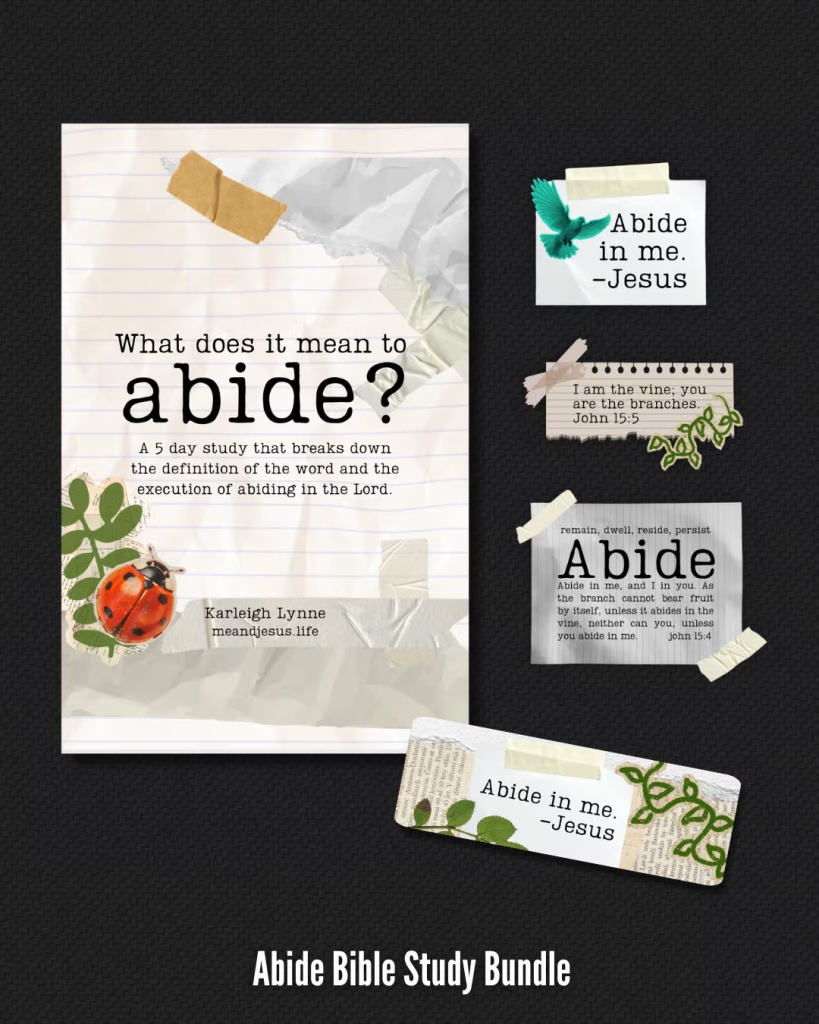
What does it mean “to abide?” We know what Jesus said to abide in Him, but what are we supposed to do? This 5 day Bible Study breaks down what abide means and how to actually abide in and lean on the Lord no matter what’s going on. Click here to check it out!
God Is Not Ashamed to Be Called Their God
That phrase in verse 16 doesn’t get nearly enough attention. God looked at these people, the ones who died without seeing fulfillment, who lived as strangers in lands they were promised, whose faith cost them everything, and He said He is not ashamed to be their God. He prepared a city for them. Their obedience was seen, it was honored, and it was rewarded in a way that outlasts every earthly timeline.
That is not a consolation prize. That is the whole point.
One of the most important things to notice here is that the writer of Hebrews doesn’t explain the suffering or try to make it sound tidy. There is no theological disclaimer, no “here’s why God allowed this,” no neat resolution to the pain. The primary concern of the writer isn’t to explain suffering. It’s to help people deal faithfully with the Christian life as it actually is, not as we wish it were. That is a pastoral decision and it is the right one, because faith doesn’t move based on what is seen.
The Hardest Question This Passage Asks
This section makes the thesis of the entire series unavoidable. Faith doesn’t move because you can see the outcome. Faith moves because God has promised something. His promises are anchored in a hope for a better future that may not arrive in your lifetime but is coming regardless.
The people in this passage did not limit their action out of fear that God wouldn’t show up. They took bold, costly, forward-facing action on the basis of a promise they could only see from afar. That’s what faith looks like when it’s fully grown.
Most of us are operating with a faith that is entirely dependent on visible results. We trust God when things are working out, we obey when we can see where it’s leading, and we stay faithful as long as the timeline feels reasonable. But this passage asks something harder: would you still be obedient to God if you knew you would never see the fulfillment in your lifetime? Would your faith hold if the promise was real but the reward was entirely on the other side of eternity?
Because the people in this passage said yes to that, and God called it faith.

If your prayer life feels distracted or dry, Fervent by Priscilla Shirer is a must-read. It’s not fluffy, it’s a straight-up battle plan for getting strategic and intentional in prayer. Practical, powerful, and rooted in Scripture. Highly recommend. Grab it here.
“That’s Not Fair”
I think about all the times I’ve said, God, it’s not fair. This hasn’t happened yet and it should be happening and I don’t understand why it’s not. And then I sit with these verses and I think about people who died without ever seeing the fulfillment of God’s promises, and I have to ask myself honestly: if I never see it on this side of eternity, will I still be obedient? Will I still have faith?
I’m praying the answer is yes. But getting there requires getting in the Word, studying, and learning to have the kind of intimate, surrendered relationship with God where His promises are enough even when the outcomes aren’t visible yet. That’s easier said than done. However, if you’re asking yourself that question today, take it to God honestly. He is not too small to handle your doubt. Go to Him and say, Lord, help me with my unbelief. Help me to trust You the way these people trusted You.
Questions to Sit With
Don’t skip these. Pull out a journal and write your answers down.
- Is your faith contingent on seeing results? If you’re honest, what would it take for you to keep obeying God even if the promise was not going to be fulfilled in your lifetime?
- Hebrews 11:16 says God is not ashamed to be called their God, referring to people who suffered, waited, and died without seeing the fulfillment. What does that tell you about how God values faithfulness over outcomes, and where do you need to apply that in your own life right now?
These questions aren’t easy, and they’re not meant to be. Take them to God and ask Him to provide discernment as you sit with them. He will meet you there.
Go read Hebrews 11. I’ll see you in part five.
I love you. God loves you.

My son absolutely loves The Action Bible! The dynamic, comic-book illustrations and action-packed storytelling sparked his excitement for the Bible like never before. If you’re looking for a powerful way to engage your child with Scripture, this is it!
Some of the links in this post are affiliate links, which means I may earn a small commission if you choose to make a purchase at no extra cost to you. I only share resources I genuinely love and believe will serve you well. Thanks for supporting the work I do through Me and Jesus.
