
If you haven’t read part one yet, start there before you go any further. Everything in this series builds on what came before it, and you need the foundation before the examples will land the way they should. You can find part one right here on the blog.
Last week we established that faith isn’t a feeling. It’s a settled, active stance toward the promises of God, and every single “by faith” statement in Hebrews 11 is attached to a verb. This week we’re getting into the first two examples in that chapter, and they share the same core theme: obedience that made absolutely no logical sense in the moment.

Abel and Noah didn’t obey because it was easy, safe, or socially acceptable. They obeyed because they trusted God more than they trusted their own circumstances, and that trust cost both of them something significant.
As always, go read these full stories in Genesis for yourself. The context you get from the full narrative is going to deepen everything we cover here.
Abel: Faithful Obedience That Cost Everything
Hebrews 11:4 says:
“By faith Abel offered to God a more acceptable sacrifice than Cain, through which he was commended as righteous, God commending him by accepting his gifts. And through his faith, though he died, he still speaks.” — Hebrews 11:4 (ESV)
Both brothers brought an offering to God. Cain brought produce from the ground, and Abel brought the firstborn of his flock, the best of what he had. God accepted Abel’s offering and rejected Cain’s, and Cain’s response was to murder his own brother.
The text doesn’t spell out exactly why God rejected Cain’s offering, but the contrast lies in the posture. Abel brought his best in faith, and Cain brought something with a heart that was off. God, who sees the heart, noticed the difference. That difference is worth sitting with.
Abel Didn’t See Reward
Abel didn’t live to see any reward from his obedience. He was murdered for it. This is one of the reasons why it matters so much that we understand what faith actually is, because having faith in God does not mean you’re going to have a cushy, comfortable life. Scripture tells us plainly that we’re going to suffer. Jesus suffered. So of course we will too.
But here’s what the writer of Hebrews points out: though Abel died, he still speaks. His faith was so real and so obedient that thousands of years later, we’re still talking about him. He is still teaching us something. The obedience of a man who died because he did the right thing is still shaping the people of God today, and that is not nothing.
His life was short and it ended violently, but it mattered eternally. Abel’s story strips away any illusion that obedient faith is rewarded with an easy life. He brought what God asked for, the way God asked for it, and it got him killed. The obedience wasn’t about earning safety. It was about aligning himself with what God deemed acceptable regardless of what it cost him here.
Enoch: The Anchor Between the Two Stories
Hebrews 11:5-6 gives us a brief but important stop between Abel and Noah:
“By faith Enoch was taken up so that he should not see death, and he was not found, because God had taken him. Now before he was taken he was commended as having pleased God. And without faith it is impossible to please him, for whoever would draw near to God must believe that he exists and that he rewards those who seek him.” — Hebrews 11:5-6 (ESV)
The Enoch conversation is a deep one we’re not going to fully unpack here, but verse six is the real anchor of this passage. Without faith, it is impossible to please God. Not difficult. Impossible.
This verse sits between Abel and Noah deliberately, because it names what both of them were operating in. They weren’t just good people trying hard. They were people who genuinely believed that God existed, that obedience to Him was worth something, and that He would reward those who sought Him, even when that reward wasn’t visible yet.
And before you go anywhere with that last part, this is not a prosperity gospel promise. Abel sought God and was murdered. Enoch walked so close to God that he bypassed death entirely. Noah obeyed God and watched the entire world be destroyed around him. The reward isn’t always comfort, safety, or material blessing. The reward is the faithfulness of God Himself. The knowledge that your obedience is seen, that it matters, and that it’s building something that extends far beyond what you can see right now. You are pleasing the creator of the heavens and the earth, the One who knitted you in your mother’s womb. That’s the reward.
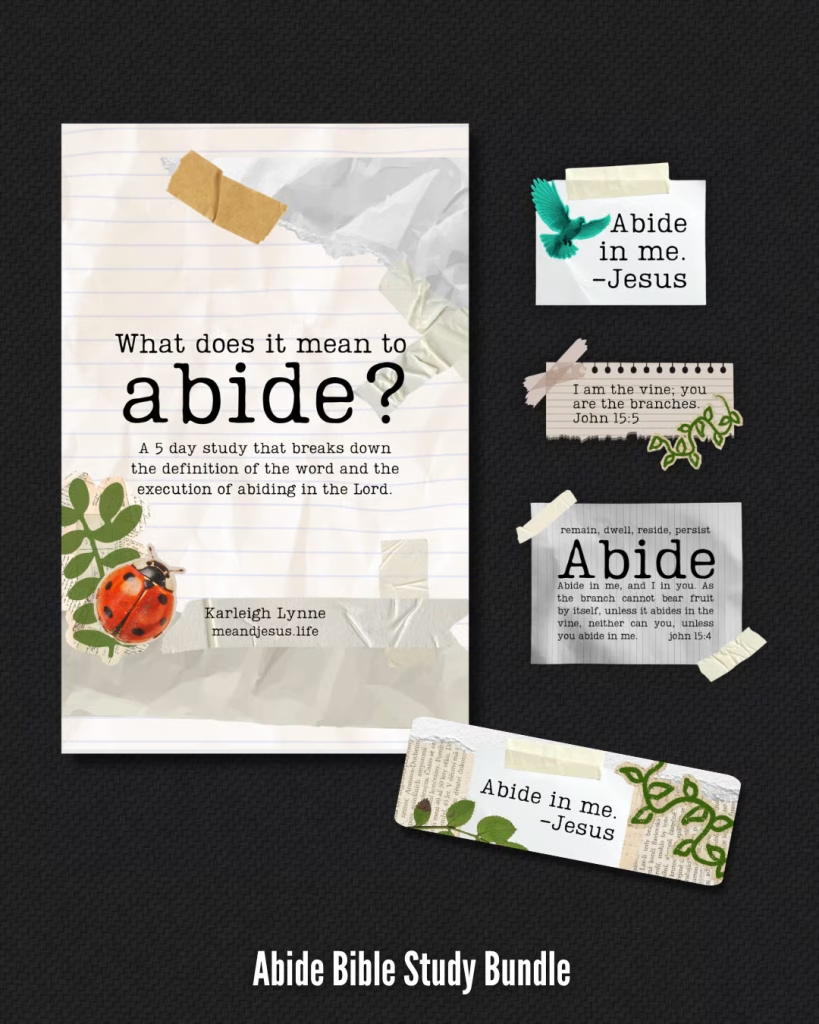
What does it mean “to abide?” We know what Jesus said to abide in Him, but what are we supposed to do? This 5 day Bible Study breaks down what abide means and how to actually abide in and lean on the Lord no matter what’s going on. Click here to check it out!
Noah: Building What Nobody Believed Was Necessary
Hebrews 11:7 says:
“By faith Noah, being warned by God concerning events as yet unseen, in reverent fear constructed an ark for the saving of his household. By this he condemned the world and became an heir of the righteousness that comes by faith.” — Hebrews 11:7 (ESV)
Noah was warned about a flood in a world that had likely never experienced rainfall in the way the flood would bring it. There was no scientific framework for what God was describing, no cultural precedent, and no reason to believe the warning made any sense at all. God didn’t just ask Noah to believe it. He asked him to build a massive boat, one that took decades, that his neighbors watched him construct the entire time, making him look completely out of his mind every single day.
Noah built it anyway. That is not reasonable by any human standard. That is obedient faith.
What strikes me about this passage is that the text says Noah built the ark for the saving of his household. One man’s personal faith, lived out in costly, visible, long-term obedience, protected his entire family. His wife, his sons, their wives, all of them survived because Noah didn’t let public opinion, logic, or the absence of visible evidence keep him from obeying. The faith you live out doesn’t just affect you.
Noah also became an heir of righteousness that comes by faith. He didn’t understand everything, and he didn’t have all the answers. He trusted that God would reward his obedience, and God gave him a new world.
The Pattern Both of Them Share
Neither Abel nor Noah obeyed because the math worked out. Abel’s obedience got him killed by his own family. Noah’s obedience made him a public spectacle for decades. However, both of them trusted that what God said was more reliable than what they could see, feel, or logically defend. And that trust produced action: faithful, costly, obedient action.
That is the pattern. That is what faith looks like when it’s real.
Most of us will not be asked to die for a sacrifice or build an ark, but we are absolutely being asked to do things that don’t make sense by the world’s standards. To forgive when it hasn’t been earned and give when it isn’t comfortable. To step into something God is calling us toward with no guarantee of how it ends.
The question Abel and Noah force us to ask is whether we trust God enough to obey when we can’t see the outcome. Because that is what faith actually requires.

If your prayer life feels distracted or dry, Fervent by Priscilla Shirer is a must-read. It’s not fluffy, it’s a straight-up battle plan for getting strategic and intentional in prayer. Practical, powerful, and rooted in Scripture. Highly recommend. Grab it here.
What’s Coming Next
Next week we’re diving into Abraham and Sarah. Abraham left for a place he had never seen and had no map to, and Sarah had faith in a promise even after she had already tried to take matters into her own hands. Faith that moves forward even when you don’t know what you’re doing, and even when you’ve already made a mess of trying to do it yourself.
Questions to Sit With
Pull out a journal and actually sit with these before you move on.
- Is there something God has been asking you to do that doesn’t make logical sense? Something you’ve been holding back on because you can’t see how it ends? What would it look like to build the ark anyway?
- Hebrews 11:6 says that without faith it is impossible to please God. Not difficult, impossible. How does that land for you, and what area of your life is most in need of that kind of faith right now?
Take these to God and ask Him to show you what He wants you to see in them.
Go read Hebrews 11. I’ll see you in part three.
I love you. God loves you.
Some of the links in this post are affiliate links, which means I may earn a small commission if you choose to make a purchase at no extra cost to you. I only share resources I genuinely love and believe will serve you well. Thanks for supporting the work I do through Me and Jesus.

