
Psalm 51 shows us what true repentance actually looks like. It records David’s response after being confronted about his sin with Bathsheba and the murder of Uriah. Instead of hiding or defending himself, David runs to God for mercy.
This psalm doesn’t just show David’s personal repentance. It provides a framework for how believers should approach God after sin. It reveals both the seriousness of sin and the incredible mercy of God, and it teaches us both what we need to understand about God’s character and what we should actually do when we recognize our own sin.

The Context Behind Psalm 51
Psalm 51 was written after the events recorded in 2 Samuel 11–12. In 2 Samuel 11, David committed adultery with Bathsheba and arranged for her husband Uriah to be killed in battle. In 2 Samuel 12, the prophet Nathan confronted David and forced him to recognize what he had done.
Scripture says that “the Lord sent Nathan to David” to expose his sin (2 Samuel 12:1). That confrontation led to the repentance we see in Psalm 51.
The ESV Study Bible Commentary explains that David’s plea for mercy “is a humble one, based entirely on God’s mercy, frankly recognizing that the worshiper does not deserve it.”¹
David fully acknowledges his guilt. In verse 3 he says, “For I know my transgressions, and my sin is ever before me.”
According to The Bible Knowledge Commentary, David’s confession came about a year after his sin occurred, and the child born from that relationship died shortly after his confession.²
Psalm 51 ultimately became more than just David’s prayer. Tremper Longman explains that the psalm functions as a model prayer of repentance for other believers as well.³
What We Need to Know About God
Part of the message of Psalm 51 centers on knowing who God is before we can approach Him rightly.
David knows something important about God. He knows that God is both just and merciful. Later in the psalm he acknowledges that God is completely righteous in His judgment, and Psalm 51:4 says that God is “blameless in [His] judgment.” David recognizes that whatever consequences come from his actions are justified.
The psalm also highlights God’s desire for truth within the human heart. In verse 6 David says that God “delight[s] in truth in the inward being” and teaches wisdom in the secret heart.
We have to recognize both God’s justice and His mercy before we can approach Him rightly, and that’s exactly what the rest of the psalm shows David doing.
For a deeper look at what this actually looked like in Scripture, see What True Repentance Looks Like: A Study of Psalm 51.
Mercy and Recognition (Psalm 51:1–2)
The first step in David’s repentance is recognizing who God is.
Psalm 51 begins with David appealing to God’s character:
“Have mercy on me, O God, according to your steadfast love; according to your abundant mercy blot out my transgressions.”
David understands that forgiveness does not come from anything he deserves. It comes entirely from God’s mercy.
The phrase “blot out” carries a deeper meaning in Hebrew. The word mḥh (מחה) means “to wipe out.”⁴ In this context it refers to completely removing something from memory.⁵
David is asking God to completely erase the record of his sin.
Acknowledging the Sin (Psalm 51:3–6)
The next step in repentance is honest confession.
In verses 3–4 David acknowledges the seriousness of what he has done. He recognizes that God’s judgment against him would be completely justified.
Although Bathsheba and others suffered because of David’s actions, David ultimately recognizes that sin is fundamentally against God.
Ross explains that David is acknowledging the reality of his sinful nature and recognizing that he has never been without sin.⁶
This realization strips away excuses and brings David face to face with the depth of his need for God’s mercy.

My son absolutely loves The Action Bible! The dynamic, comic-book illustrations and action-packed storytelling sparked his excitement for the Bible like never before. If you’re looking for a powerful way to engage your child with Scripture, this is it!
Asking for Cleansing (Psalm 51:7–12)
After acknowledging his sin, David asks God to cleanse and restore him.
In verse 8 David says:
“Let me hear joy and gladness; let the bones that you have broken rejoice.”
This reflects the deep conviction David experienced after being confronted by Nathan. The weight of his sin had broken him, and now he asks God to restore his joy.
David also asks to be restored to God’s presence. He understands that sin has created separation between him and God.
Repentance is not just about admitting wrongdoing. It is about seeking true restoration.
Testifying to God’s Goodness (Psalm 51:13–19)
The final section of the psalm shows the result of repentance.
In verse 13 David says:
“Then I will teach transgressors your ways, and sinners will return to you.”
David recognizes that his restoration will allow him to lead others back to God.
The psalm ends with praise and worship. In verse 14 David promises that his tongue will sing aloud of God’s righteousness.
True repentance does not stop with forgiveness. It leads to gratitude, worship, and a desire to point others toward God.
The Principles Behind Repentance
A few key principles about repentance run underneath everything David does in this psalm.
First, sin is ultimately against God. In verse 4 David says, “Against you, you only, have I sinned.” While other people were harmed by David’s actions, he recognizes that all sin is fundamentally a violation of God’s holiness.
Second, forgiveness comes from God’s character, not anything David has done to earn it. David appeals to God’s “steadfast love” and “abundant mercy” in verse 1.
Third, God desires transformation, not empty ritual. In verses 16–17 David says that God does not ultimately delight in sacrifices but in a broken and contrite heart. Allen Ross explains that the message of this psalm is that “the vilest offender among God’s people can appeal to God for forgiveness… if he comes with a broken spirit and bases his appeal on God’s compassion and grace.”⁷
Repentance is not about saying the right words. It is about genuine humility and a changed heart.
Repentance Does Not Remove Consequences
Psalm 51 also reminds us of something important. Repentance does not erase the consequences of sin.
Even though David repented, the damage caused by his actions still remained. His child died, and Uriah was still gone.
This shows that repentance does not minimize sin or excuse the harm that it causes. Instead, repentance restores a person’s relationship with God while still acknowledging the seriousness of what happened.
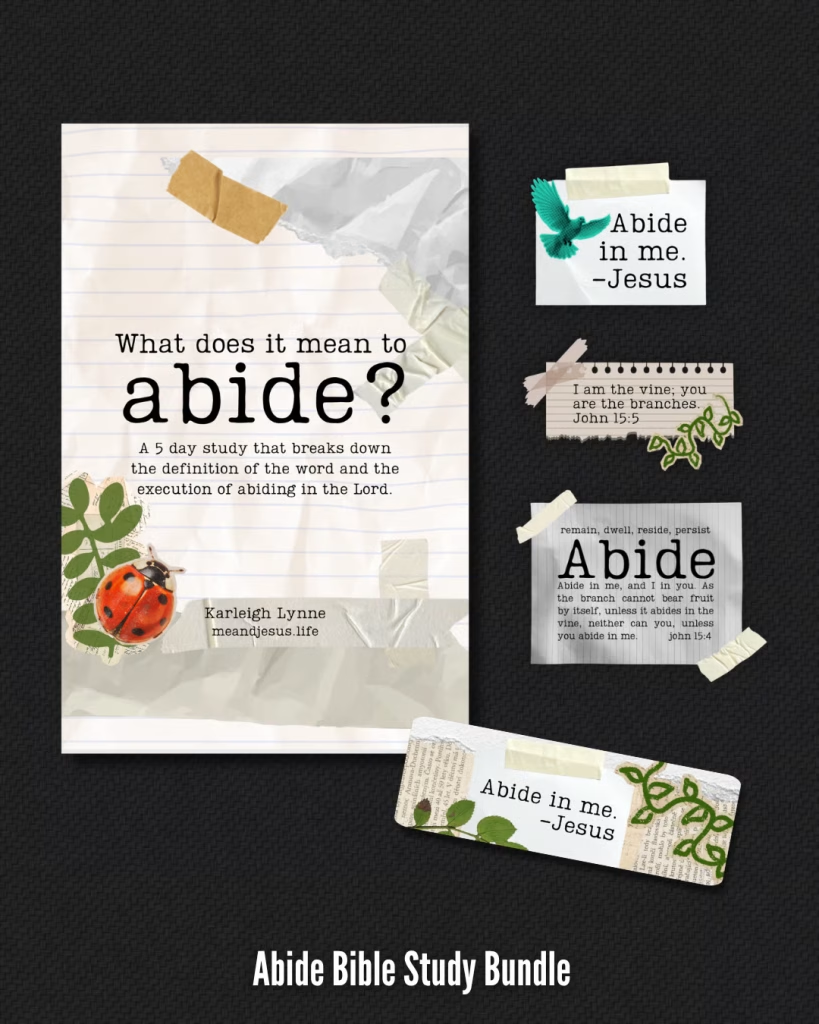
What does it mean “to abide?” We know what Jesus said to abide in Him, but what are we supposed to do? This 5 day Bible Study breaks down what abide means and how to actually abide in and lean on the Lord no matter what’s going on. Click here to check it out!
A Picture of Repentance
Psalm 51 provides a clear framework for repentance.
David does not minimize his sin. He takes responsibility for it and appeals to God’s mercy. He asks for cleansing, restoration, and a renewed heart.
At the same time, this psalm reminds us that repentance is not about repeating a specific prayer. David himself says that God does not ultimately desire ritual sacrifices but a broken and contrite heart.
That is where true freedom begins.
No matter how serious the sin may be, repentance opens the door to God’s mercy. And that mercy leads to the freedom David longed for in Psalm 51.
Bibliography
Brown, Francis, S. R. Driver, and Charles A. Briggs. Enhanced Brown-Driver-Briggs Hebrew and English Lexicon. Oxford: Clarendon Press, 1977.
Crossway Bibles. The ESV Study Bible: English Standard Version. Wheaton, IL: Crossway Bibles, 2008.
Longman, Tremper III. Psalms: An Introduction and Commentary. Edited by David G. Firth. Vols. 15–16. Tyndale Old Testament Commentaries. Nottingham, England: InterVarsity Press, 2014.
Ross, Allen P. “Psalms.” In The Bible Knowledge Commentary: An Exposition of the Scriptures. Edited by John F. Walvoord and Roy B. Zuck. Vol. 1. Wheaton, IL: Victor Books, 1985.
Footnotes
- Crossway Bibles, The ESV Study Bible: English Standard Version (Wheaton, IL: Crossway Bibles, 2008), 999.
- Allen P. Ross, “Psalms,” in The Bible Knowledge Commentary: An Exposition of the Scriptures, ed. John F. Walvoord and Roy B. Zuck, vol. 1 (Wheaton, IL: Victor Books, 1985), 832.
- Tremper Longman III, Psalms: An Introduction and Commentary, ed. David G. Firth, vol. 15–16, Tyndale Old Testament Commentaries (Nottingham, England: InterVarsity Press, 2014), 223.
- Francis Brown, Samuel Rolles Driver, and Charles Augustus Briggs, Enhanced Brown-Driver-Briggs Hebrew and English Lexicon (Oxford: Clarendon Press, 1977), 562.
- Ibid.
- Ross, “Psalms,” 832.
- Ross, “Psalms,” 832.
Some of the links in this post are affiliate links, which means I may earn a small commission if you choose to make a purchase at no extra cost to you. I only share resources I genuinely love and believe will serve you well. Thanks for supporting the work I do through Me and Jesus.
