
Reading chapters four through six of With by Skye Jethani forced me to confront something I did not expect. I thought I was reading a book about theology and spiritual posture. What I ended up reading was a description of my own struggles with control, fear, identity, and surrender.
These chapters exposed how easy it is to reshape God into something that fits our own expectations, fears, and desires. They also revealed how often we pursue the benefits of faith while quietly resisting the deeper relationship God is actually inviting us into.

When We Remake God in Our Own Image
One of the ways I have reshaped God into my own image comes from how I have viewed myself.
For years I believed that I was not good enough and that my life was not worth living. Because of that belief, I assumed God must see me the same way. I thought He looked at me with disappointment or disgust. In my mind, I was somehow beyond repair.
Even now, that thought occasionally creeps back in. I find myself thinking I need to earn salvation or prove that I deserve God’s approval. I fear that if I mess up even once, everything could fall apart and there would be no way back.
What I did not realize is that this mindset quietly limits God. It assumes that redemption has boundaries and that Jesus’ sacrifice somehow does not reach far enough.
In a strange way, that belief becomes arrogance. It assumes that salvation can be earned and that God’s ability to redeem is smaller than our brokenness. Untangling those beliefs from my understanding of God has been a long process, but I am grateful that God is far greater than the version of Him I once imagined.
Why Discomfort Matters
Another idea these chapters explore is how deeply our culture encourages us to avoid discomfort.
We are constantly told to focus on our strengths, maximize productivity, and chase whatever brings the greatest reward. In my own life, that mindset fueled an unhealthy obsession with work. As a single mother raising a special needs child, survival became the primary goal. I worked constantly because it felt like the only option.
What I did not understand at the time is that God commands rest.
Rest felt uncomfortable because it forced me to confront everything I had been avoiding. It also forced me to face the reality that some of the things God was calling me to do required trust rather than control.
Scripture makes it clear that comfort is not the ultimate goal of the Christian life. The prosperity messages we sometimes hear today fall apart when placed next to the reality of Scripture. Stephen was stoned to death. Paul endured beatings, imprisonment, and shipwrecks. Jesus Himself promised that we would experience trouble in this world.
Growth almost always happens in discomfort.
Right now, discomfort looks like learning to trust God as my provider and allowing Him to carry burdens I have tried to control for most of my life. I do not enjoy that process, but I know it is necessary.
Would We Want Faith Without God?
One of the questions raised in these chapters forced me to examine my motives.
If I could receive every blessing I want from faith without the need to pray or commune with God, would I accept that?
Two years ago I am ashamed to admit that my answer might have been yes.
Now my answer is completely different.
Experiencing the presence of God has changed everything for me. The reality that we have direct access to God is something that overwhelms me with gratitude. In the Old Testament, people had to consecrate themselves simply to approach Him. Today we can speak directly to Him because of what Jesus accomplished.
I have experienced moments of communion with God that I cannot fully explain. During one Bible study, while sitting at my dining room table struggling to understand a passage, I experienced the presence of Jesus in a way that brought incredible peace and clarity.
Moments like that make it impossible to imagine faith without relationship. Communion with God is not a bonus feature of faith. It is the entire point.
When Good Things Become Idols
Jethani describes idols as good things that become ultimate things.
For me, the strongest example of that is my desire to give my son a good life.
As a single mother, I spent years trying to create a better future for him than the one I experienced growing up. Unfortunately, life has not been easy for him either. My son is autistic and has experienced trauma connected to the struggles we have gone through together.
Watching him face those challenges is incredibly painful. At times I become angry with God for allowing him to experience similar difficulties.
In those moments, my desire to protect my son becomes an idol. Instead of trusting God’s plan, I shift into problem solving mode and convince myself that I need to figure everything out.
Every time that happens, God gently reminds me that His plan is already complete. There is nothing I need to solve. My role is simply to trust Him.
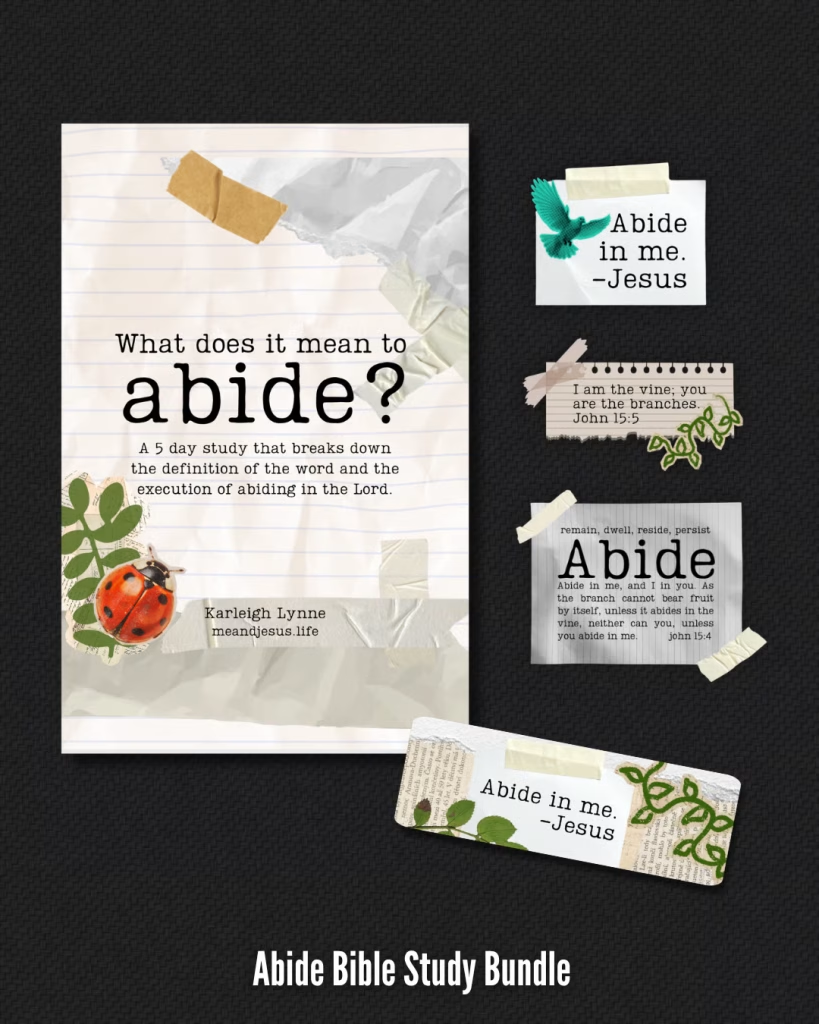
What does it mean “to abide?” We know what Jesus said to abide in Him, but what are we supposed to do? This 5 day Bible Study breaks down what abide means and how to actually abide in and lean on the Lord no matter what’s going on. Click here to check it out!
How God Sees Us in the Middle of Sin
Logically, I know how God sees me because of what Jesus accomplished on the cross.
Through Christ I am redeemed and adopted into God’s family. I understand that truth intellectually, but remembering it emotionally is sometimes difficult.
Unfortunately I still catch myself trying to repair my relationship with God as if it depends on my effort. I sometimes wonder whether I have somehow gone too far.
Ironically, the more I study Scripture, the more I realize that this tension is part of spiritual growth. I never want to become so comfortable with God’s grace that I forget the cost of it.
Every day I want to understand His love more deeply. Each step toward that understanding pulls me farther away from shame and closer to Him.
The Hidden Ranking of Vocations
Another idea that surfaced in this reading is how society quietly ranks different vocations.
When I was younger, people constantly told me that I was destined to become a lawyer. I was considered the “smart one,” the child who would achieve something impressive.
When I decided I wanted to become a teacher instead, I could see the disappointment on people’s faces even though they tried not to express it. Later, when I left school entirely because I disagreed with aspects of the educational system, that disappointment only grew.
Now that I am an entrepreneur, I realize that the ranking of careers is rarely about actual impact. It is usually about prestige.
In our culture, professions like doctors and attorneys are often seen as the most important. Jobs like fast food work are often treated as the least valuable.
But when you step back and look honestly at the world, value is not determined by status. Every role contributes something meaningful.
Do I Want God, or What God Can Give Me?
One of the hardest questions these chapters raise is whether we truly desire God Himself or simply what He can provide.
I want my primary desire to be God but I am not sure I can honestly say that it always is.
I pray for a stable life for my son, financial relief and a home of our own.
But even those prayers reveal something about my heart. If God never provided those things, I would still have to trust that His plan is better.
The day I reach the point where God’s presence alone is enough will be the day I can truly say that He is my only desire.
How Our View of God Is Formed
My view of God has changed dramatically over time.
Growing up, I was part of a church culture that emphasized perfection. The message I absorbed was that certain sins made God disgusted with you.
For a long time I believed that.
Studying Scripture for myself has completely changed that perspective. The Bible reveals a God whose love and grace are far greater than I once understood.
Today my understanding of God is shaped primarily by Scripture and by the spiritual leaders God has placed in my life. My view of Him is now overwhelmingly positive, even when I do not understand what He is doing.
His ways are far beyond mine, and that truth brings peace rather than fear.
Prayer as Communion
My prayer life has usually looked like communication with God rather than communion with Him.
I often begin prayer with gratitude, reminding myself of what God has already done before bringing my requests to Him. Even so, prayer can sometimes feel like a chore, especially when I am asked to pray aloud or pray for someone I struggle to love.
What fascinates me most are the moments when prayer becomes something deeper. There have been times when it felt like genuine back and forth conversation with God.
Those moments of communion change everything.
The early church in the book of Acts demonstrated incredible boldness in their faith. I have prayed many times for that same boldness.
As I reflect on these chapters, I realize that the boldness I admire in Acts was rooted in something deeper than knowledge or discipline.
It came from consistent communion with God.
That is what I want to grow in.
Bibliography
Jethani, Skye. With: Reimagining the Way You Relate to God. Nashville: Thomas Nelson, 2011.

The ESV Study Bible is hands down my favorite. It’s packed with context, maps, commentary, and notes that help make Scripture clearer without watering it down.
This is the exact one I use!
It’s deep, solid, and totally worth it.
Some of the links in this post are affiliate links, which means I may earn a small commission if you choose to make a purchase at no extra cost to you. I only share resources I genuinely love and believe will serve you well. Thanks for supporting the work I do through Me and Jesus.
